Account settings often determine how clearly you can manage access, identity checks, spending controls and personal information. For Canadian adults comparing lussurio online casino with other legal casino platforms Canada listings, the useful question is not simply whether an account can be opened. It is whether the account area gives you understandable control over security, verification, limits and support when something changes.
Start by separating account access from account approval
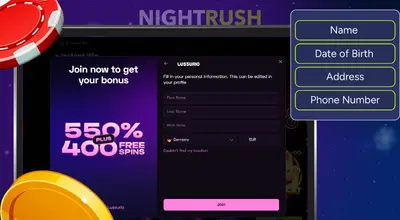
Creating an account and receiving approval for all account functions are different stages. Registration normally involves accurate personal details, residence information and a working email address or phone number. The account may also require a selected currency and acceptance of the operator’s terms. These details should match your identity documents because later corrections can require a support review.
Access settings concern the everyday ability to sign in, recover a password and contact assistance if the account becomes restricted. Available information indicates that login recovery can be handled through a recovery flow or customer support, but the exact authentication options are not consistently documented. That makes it sensible to record the registered contact details and keep them current.
Approval is more demanding when money or compliance checks are involved. Know Your Customer procedures may request government-issued identification, proof of address and evidence that the deposit or withdrawal method belongs to you. A verification review may be listed as taking up to 72 hours, while additional checks can extend the timeframe. Do not assume that successful registration means every account function is immediately available.
Which personal details should you review regularly?
A good account-settings routine begins with the information that affects identity and payments. Check your legal name, residential address, phone number, email address and selected account currency. If you move, change contact information or replace a payment method, update the account through the available settings or ask support what documentation is required.
Duplicate registrations are commonly restricted, so opening another account to solve a forgotten password, changed address or payment issue can create a larger problem. Use the recovery process instead. Changes to identity details or uploaded documents may be held for manual review, particularly when the change affects withdrawal eligibility or raises a question about account ownership.
Privacy settings deserve the same attention as profile details. Review which communications you receive, whether promotional messages are enabled and how you can unsubscribe where an option is provided. Keep copies of important correspondence and submitted documents in a secure place, but avoid sending identity material through unofficial channels. If a request seems unusual, verify it through the operator’s stated support route before responding.
How can you use limits without confusing them with payment controls?
Account-control tools can include deposit limits, wagering limits, loss limits, time or session limits, reality checks, cooling-off periods and self-exclusion. Each tool addresses a different behaviour. A deposit limit concerns money added, while a loss limit concerns the result of play. A session limit concerns time, not necessarily spending.

Before selecting a control, decide what you want it to prevent. A reality check may remind you how long a session has lasted. A cooling-off period can create a temporary break. Self-exclusion is a stronger restriction intended to block access for a chosen period or under stated conditions. Read the setting’s description carefully because changing or removing a control may involve a waiting period or support intervention.
Do not treat a displayed balance, a deposit ceiling or an account limit as proof that gambling is affordable. These settings are tools, not a budget or an income plan. For broader public information about safer gambling and support options, consult Canadian public-health information on problem gambling. If a limit is difficult to maintain, use a stronger restriction rather than repeatedly adjusting it.

What should you check before relying on the cashier area?
The cashier is an account function, but its settings can be subject to separate identity and payment rules. Canadian-focused information identifies CAD as a supported currency and lists several possible payment categories, including cards, bank transfers, e-wallets and alternative methods. Availability can vary by country, bank, currency and the individual cashier profile, so a general list is not a guarantee for every account.
Thresholds also need careful reading. Published material gives different minimums and withdrawal limits across currencies and methods, including Canada-focused figures that may not match international listings. The amount shown inside the account should be treated as the operative figure for that transaction. Promotional conditions, payment ownership checks and any required play-through of deposits can affect whether a withdrawal request proceeds.
Keep a simple record of deposits, withdrawals, confirmations and support messages. If a withdrawal is paused, ask which requirement is outstanding: identity evidence, payment ownership, a provider review or a promotional condition. Published processing windows are only indications; verification or compliance checks can add time. Never create a second account or alter personal information merely to bypass a pending review.
How should you handle account security and support?
Use a unique password that is not reused for email, banking or social media. Store it in a reputable password manager where possible, and protect the email or phone account connected to the casino profile. Avoid signing in on shared devices, public computers or unsecured networks, and log out after using a borrowed device.
Security also includes recognising suspicious messages. Support should not need your full password, and an unexpected request for sensitive documents or payment details deserves verification. Check the address of the website carefully, avoid downloading an unverified mobile application and keep your phone and browser updated. A browser-based mobile site should not automatically be treated as a native app from an official store.
When contacting support, explain the issue in a short timeline and include relevant transaction or verification references without exposing unnecessary information. Live chat and email are listed support routes, with assistance described as available around the clock. Save the case number and replies. If the account is locked, funds are pending or documents are under review, ask for the next required action rather than repeatedly submitting the same material.
Account-setting questions Canadian players often ask
Can I change my personal details after registration?
Usually, a change may be possible, but it can require support review and identity evidence. Update details before requesting a withdrawal where possible, and make sure the new information matches official documents. Do not open a second account to work around an incorrect address, name or contact detail.
Does passing registration mean withdrawals are fully available?
No. Registration confirms that an account was created, while withdrawals may trigger Know Your Customer and payment-ownership checks. The operator may request identification, proof of address or transaction evidence. Promotional terms, deposit play-through and provider reviews can also affect whether a particular withdrawal is released.
What is the difference between cooling-off and self-exclusion?
A cooling-off period is generally a temporary break from account activity. Self-exclusion is a stronger access restriction intended to prevent gambling for a selected period or under stated conditions. Read the specific setting before confirming it, because reinstatement rules and support requirements may differ.